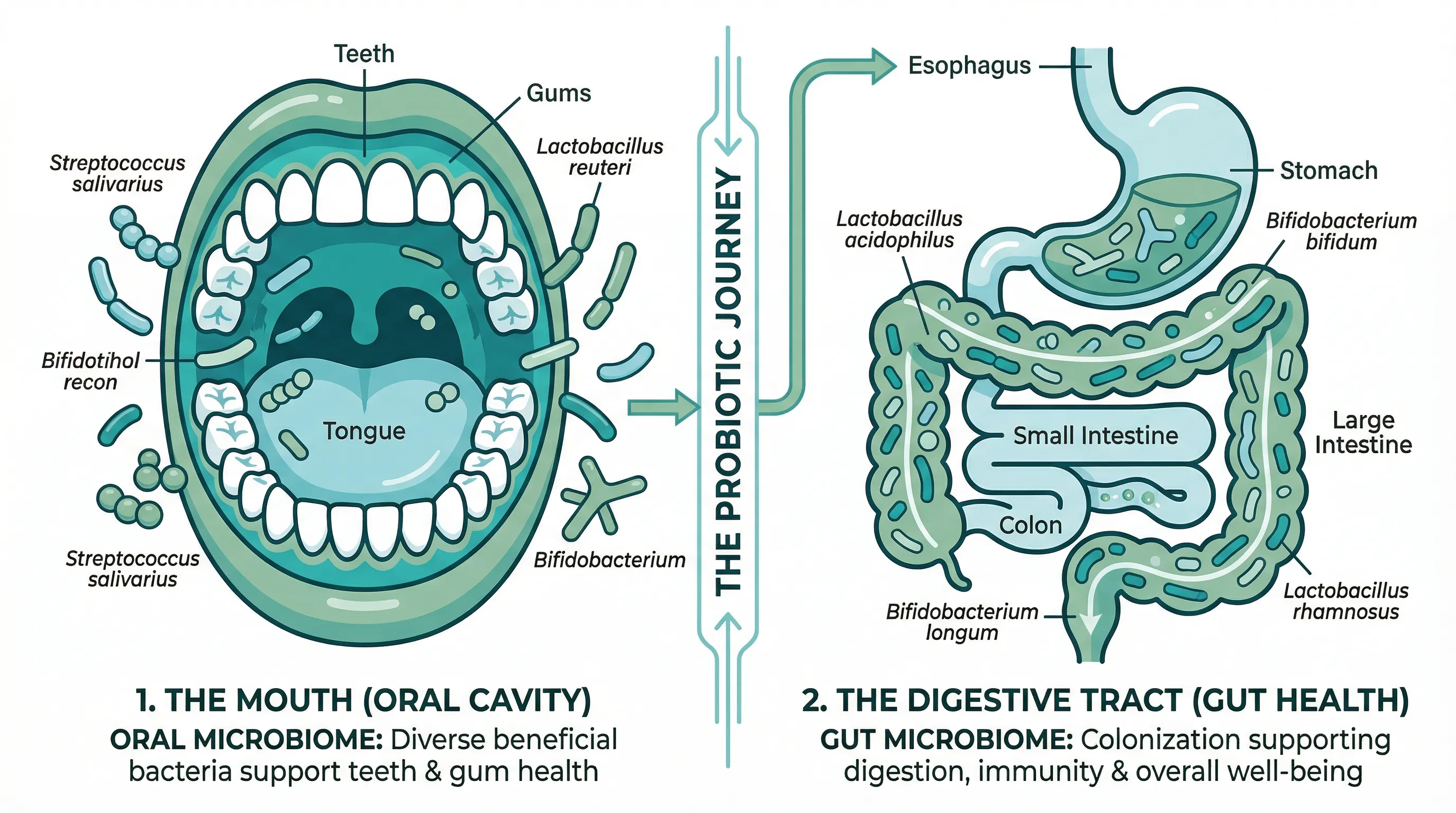
Oral probiotics and gut probiotics are fundamentally different products designed for different environments. Oral probiotics use strains like L. reuteri, S. salivarius K12, and L. paracasei that colonize the mouth, and they are delivered as dissolving tablets or lozenges. Gut probiotics use different strains in swallowable capsules designed to survive stomach acid. Taking a gut probiotic will not improve your oral health — you need the right strains in the right delivery format.
Walk into any supplement aisle and you will find dozens of probiotic products. Most of them are designed for digestive health — Lactobacillus acidophilus, Bifidobacterium lactis, and similar strains packaged in capsules you swallow with water. But a growing category of probiotics targets the mouth specifically, and these products work in fundamentally different ways.
If you have been wondering whether your daily gut probiotic is doing anything for your teeth and gums, the short answer is: probably not. Here is why, and what to look for instead.
The Oral Microbiome Is Not the Gut Microbiome
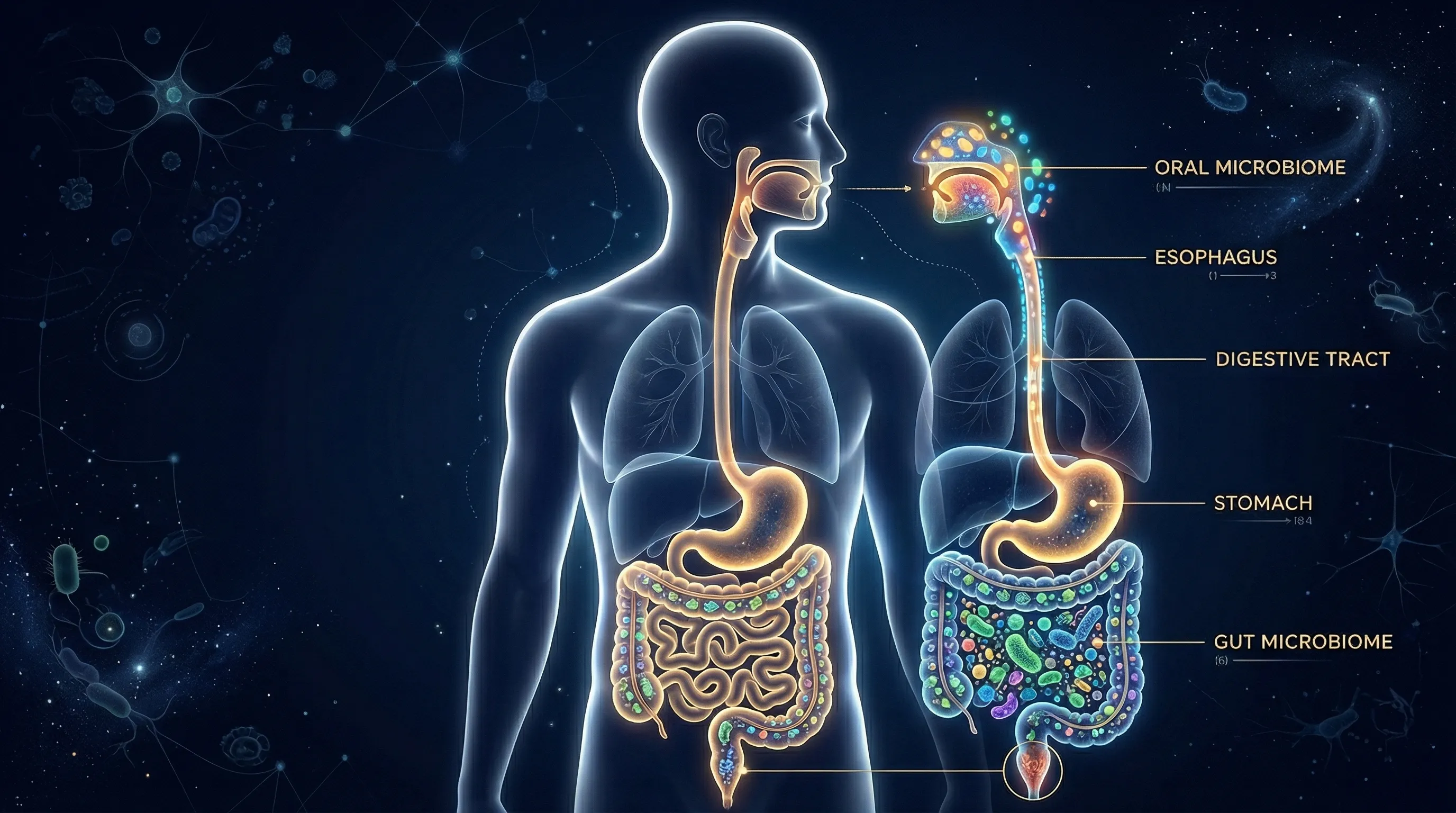
Your mouth harbors roughly 700 species of bacteria, fungi, and other microorganisms, making it the second most diverse microbial community in the human body after the gut. But the two ecosystems are remarkably different.
A landmark 2012 study published in Nature as part of the Human Microbiome Project mapped microbial communities across body sites and found that the oral microbiome is compositionally distinct from the gut microbiome. The mouth is aerobic (exposed to oxygen), coated in saliva, and subject to constant mechanical disruption from eating, drinking, and brushing. The gut is largely anaerobic, acidic, and protected by mucus layers.
These environmental differences mean that bacteria which thrive in your intestines often cannot survive in your mouth, and vice versa. A strain of Lactobacillus acidophilus optimized for the acidic, oxygen-poor environment of the lower GI tract has no particular advantage in the oxygen-rich, saliva-washed oral cavity.
Different Strains for Different Sites
The most important distinction between oral and gut probiotics is the bacterial strains they contain.
Key Oral Probiotic Strains
-
Lactobacillus reuteri (DSM 17938 and ATCC PTA 5289) — Among the most studied oral probiotic strains. Research published in the Journal of Clinical Periodontology (2013) found that L. reuteri supplementation reduced gingival bleeding and pocket depth in periodontitis patients. This strain produces reuterin, an antimicrobial compound that may selectively inhibit pathogenic bacteria.
-
Streptococcus salivarius K12 — A naturally occurring oral bacterium that produces bacteriocin-like inhibitory substances (BLIS). A 2009 study in the International Journal of General Medicine demonstrated that S. salivarius K12 colonized the oral cavity and was associated with reduced episodes of streptococcal pharyngitis in children. It has also been studied for its potential role in reducing halitosis.
-
Streptococcus salivarius M18 — Closely related to K12 but with a focus on dental caries. Research in Beneficial Microbes (2014) found that M18 produces enzymes like dextranase and urease that may help break down dental plaque and neutralize acids in the mouth.
-
Lactobacillus paracasei — Studied for its ability to inhibit Streptococcus mutans, the primary bacterium associated with tooth decay. A 2014 study in the Journal of Applied Microbiology found that L. paracasei strains could reduce S. mutans adhesion to surfaces, potentially lowering cavity risk.
Common Gut Probiotic Strains
Gut probiotics typically contain strains like Lactobacillus acidophilus, Lactobacillus plantarum, Bifidobacterium longum, Bifidobacterium lactis, and Saccharomyces boulardii. These strains have strong evidence for digestive health — supporting regularity, reducing antibiotic-associated diarrhea, and modulating immune function in the gut — but they have not been shown to colonize the oral cavity or provide targeted oral health benefits.
Delivery Format Matters More Than You Think
Even if a gut probiotic happened to contain an oral-relevant strain, the delivery method would undermine its effectiveness for the mouth.
How Oral Probiotics Are Delivered
Oral probiotics come as dissolving tablets, lozenges, or chewable tablets that you hold in your mouth. This is not a minor detail — it is the entire mechanism of action. As the tablet dissolves, bacteria are released directly onto oral surfaces: the tongue, gums, cheeks, and teeth. This extended contact time (typically 5-10 minutes) allows the probiotic strains to adhere to oral tissues and begin colonization.
Some oral probiotic formulations also include prebiotics like inulin that help feed the beneficial bacteria once they have established themselves.
How Gut Probiotics Are Delivered
Gut probiotics come in swallowable capsules — often with enteric coating or delayed-release technology specifically designed so that the bacteria bypass the mouth and stomach entirely and arrive intact in the intestines. The whole engineering goal is to prevent the bacteria from being released in the mouth.
This means that swallowing a gut probiotic capsule provides virtually zero contact time between the bacteria and your oral tissues. The probiotic passes through your mouth in seconds and is designed to release its contents much further downstream.
Why Your Gut Probiotic Won't Fix Your Mouth
To summarize the three-part problem:
- Wrong strains — Gut probiotic strains are not adapted to the oral environment and have not been studied for oral health benefits
- Wrong delivery — Capsules bypass the mouth entirely, providing no opportunity for oral colonization
- Wrong colonization target — Even if gut strains were released in the mouth, they are optimized to adhere to intestinal epithelium, not oral mucosa
A 2019 review in Frontiers in Microbiology examined the site-specificity of probiotic colonization and concluded that strain selection must match the target body site for meaningful clinical outcomes. The researchers emphasized that "probiotic effects are strain-specific and site-specific."
What the Research Says About Oral Probiotics
The evidence base for oral probiotics has grown substantially over the past decade.
A 2016 systematic review in the Journal of Clinical Periodontology analyzed 12 randomized controlled trials and concluded that oral probiotics, particularly L. reuteri, showed "a statistically significant reduction in probing pocket depth and clinical attachment gain" in periodontitis patients when used as an adjunct to scaling and root planing.
For caries prevention, a 2019 meta-analysis in BMC Oral Health reviewed 23 studies and found that probiotic interventions reduced Streptococcus mutans counts in saliva, though the authors noted that long-term outcomes on actual cavity formation still need further study.
For halitosis, a 2017 study in the Journal of Medical Microbiology found that S. salivarius K12 significantly reduced volatile sulfur compounds — the molecules responsible for bad breath — compared to placebo over a 30-day supplementation period.
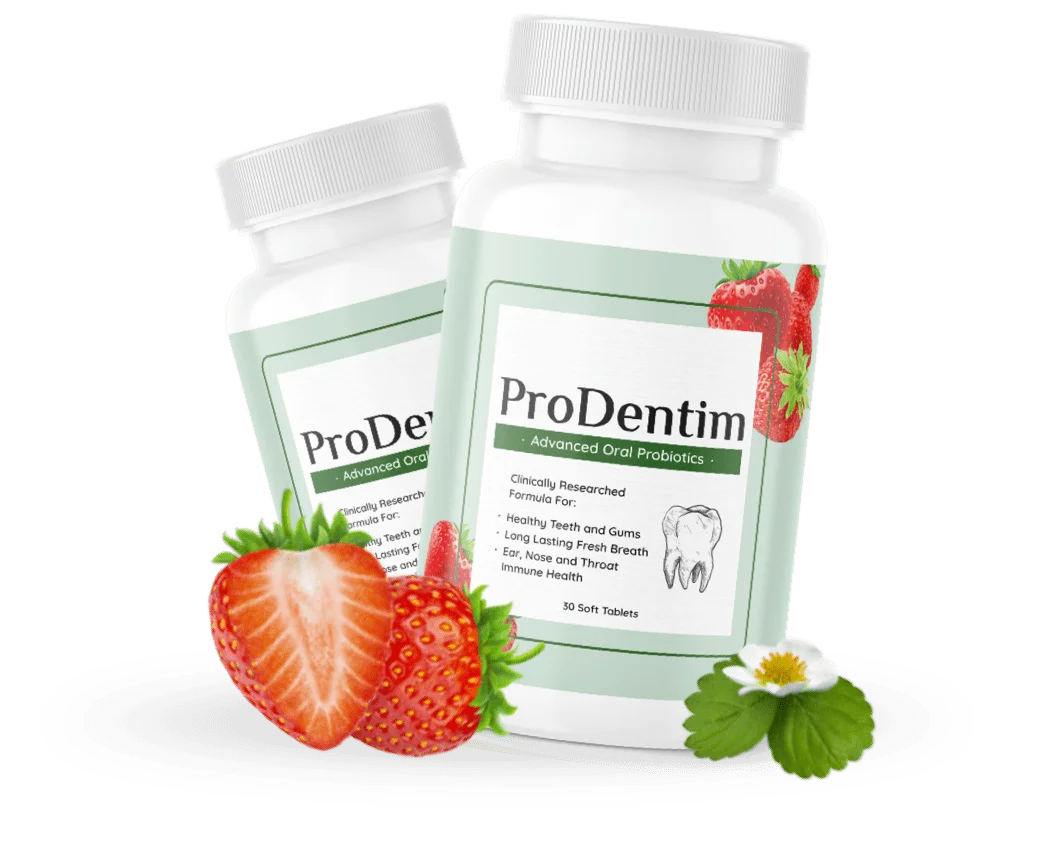
ProDentim
Oral Probiotic for Gum & Teeth Health
ProDentim is formulated with oral-specific probiotic strains including L. reuteri, L. paracasei, and B. lactis BL-04, delivered as a dissolving tablet designed for oral colonization rather than gut delivery.
We may earn a commission if you make a purchase through our links, at no extra cost to you.
A Practical Buying Guide for Oral Probiotics
If you are considering an oral probiotic, here is what to evaluate:
1. Check the Specific Strains
Look for products that list strains by their full designation (e.g., Lactobacillus reuteri DSM 17938), not just the species name. Strain-level identification matters because different strains of the same species can have very different effects.
2. Verify the Delivery Format
The product should be a dissolving tablet, lozenge, or chewable — never a capsule you swallow with water. If the directions say "swallow with water," it is a gut probiotic regardless of what strains it contains.
3. Check CFU Count
Colony-forming units (CFU) indicate the number of viable bacteria per dose. Most studied oral probiotics use counts between 1 billion and 3.5 billion CFU per dose. More is not necessarily better — the right strains at adequate doses matter more than raw numbers.
4. Look for Clinical Evidence
Reputable oral probiotic products should be able to point to published studies on their specific strains. Be wary of products that cite general probiotic research without linking it to their actual formulation.
5. Consider Timing
Most oral probiotics are best taken after brushing your teeth at night, when mechanical disruption is minimized and the bacteria have the longest uninterrupted period to colonize oral surfaces.
6. Be Realistic About Expectations
Oral probiotics are a complement to good oral hygiene, not a replacement. Continue brushing, flossing, and visiting your dentist for regular cleanings. Consult your dentist about whether an oral probiotic is appropriate for your specific oral health situation.
Can You Use Both Oral and Gut Probiotics?
Absolutely. Oral and gut probiotics are not competing products — they serve different purposes for different parts of your body. If you find value in a gut probiotic for digestive health, there is no reason you cannot add an oral probiotic for your mouth.
The key is to take them differently: swallow your gut probiotic with water as directed, and let your oral probiotic dissolve slowly in your mouth. Taking them at different times of day can make the routine simpler.

ProvaDent
Advanced Dental Probiotic Formula
ProvaDent is another oral probiotic option that takes a slightly different approach to supporting the oral microbiome. Comparing products can help you find the right fit for your needs.
We may earn a commission if you make a purchase through our links, at no extra cost to you.
The Bottom Line
Oral probiotics and gut probiotics are distinct products designed for distinct microbial ecosystems. They differ in strains, delivery format, and colonization targets. If your goal is to support your oral microbiome — to promote healthier gums, fresher breath, or a more balanced bacterial environment in your mouth — you need a product specifically formulated for the oral cavity, not a general gut probiotic.
The science is still evolving, and researchers continue to identify new oral probiotic strains and applications. But the core principle is clear: the right bacteria, delivered to the right place, in the right way.